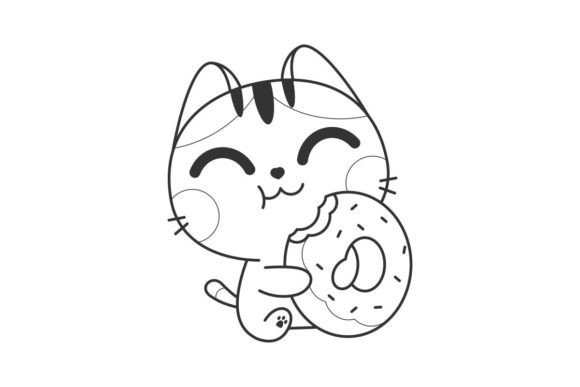
Kitten Character Eating Donut Line Style
In the dynamic world of visual design, a single, well-crafted asset can transform a project from ordinary to unforgettable. The charming and versatile Kitten Character Eating Donut Line Style is a prime example of a creative resource that blends personality with professional polish, offering designers an immediate injection of whimsy and warmth into any visual narrative.
This specific style refers to a vector illustration characterized by its clean, single-weight outlines, depicting an adorable kitten interacting with a donut. Its power lies in its simplicity and scalability. As a vector format, it can be resized to any dimension without losing quality, making it a cornerstone asset for a modern design workflow. The line-based approach ensures it integrates seamlessly with various color palettes and backgrounds, supporting rather than overwhelming other elements in your visual hierarchy.
Why This Style Resonates in Modern Design
Contemporary graphic design trends lean towards authenticity, approachability, and playful sophistication. A Kitten Character Eating Donut Line Style asset directly taps into this, creating an instant emotional connection with viewers. It moves beyond generic stock imagery to convey a specific, friendly brand personality. In brand identity and logo design, such a character can become a memorable mascot, humanizing a business and making it more relatable to its audience. Its inherent charm is particularly effective in industries like food and beverage, pet care, lifestyle blogs, and children's products, where warmth and approachability are key to the brand identity.
Practical Applications for Creatives and Businesses
The utility of this asset spans a wide array of creative projects. Its adaptability is its greatest strength, allowing it to enhance communication across multiple platforms.
- Branding & Marketing Materials: Use the kitten as a central motif on business cards, letterheads, and packaging. It adds a unique touch to packaging design for baked goods, coffee shops, or subscription boxes, instantly grabbing attention on a shelf.
- Digital Presence: In web design and UI design, it can serve as a delightful loading animation, a 404 page character, or an engaging illustration for a blog post about pet care or sweet treats. For social media graphics, it’s perfect for creating cohesive Instagram stories, Facebook posts, or Twitter banners that boost user engagement and shareability.
- Editorial & Presentation Design: Break up text-heavy layouts in magazines, reports, or pitch decks. The line style ensures it complements typography without creating visual clutter, maintaining a clean and professional presentation.
- Merchandise & Digital Products: This style translates beautifully onto physical products like stickers, apparel, and mugs, as well as digital products such as printable planners, greeting cards, and online course materials.
Integrating Assets with a Cohesive Design System
To maximize impact, consider how the Kitten Character Eating Donut Line Style interacts with other design elements. Its simplicity makes it incredibly compatible with a range of typography choices—from playful handwritten fonts to clean sans-serifs. When selecting colors, you can apply a single hue to the line art to match your brand identity's primary or accent color, or use a limited palette for a more vibrant look. The key is consistency; using the same style of character across all touchpoints reinforces brand identity and creates a unified visual design experience.
Ultimately, thoughtful asset selection is a hallmark of skilled graphic design. A resource like this isn't just a decoration; it's a strategic tool for visual communication. By choosing high-quality, versatile elements that align with your project's goals and audience expectations, you streamline your design workflow, elevate the final aesthetic, and craft narratives that resonate on a human level. Investing in such creative assets pays dividends in the clarity, professionalism, and emotional impact of your work.